IF Presents
Spotlight / André Muir: When They Come for Us
A short film and a conversation
IF: What was the point of departure for When They Come for Us?
Andre Muir: I started by thinking about the idea of a "they."
I think Black people, and oppressed people in general, become so accustomed to interruption — to people coming into our lives and intervening in them. How will they indignify us today? What new law or rule will encroach upon our rights tomorrow? Even the act of constantly living in anticipation of that interruption is an indignity in itself. It's a mechanism of control.
I think about slavery, then Jim Crow, then mass incarceration. There's this continual reinvention of oppression, where the mechanisms change, the language shifts, but the underlying relationship remains the same. Today we have the carceral state, mass surveillance, the overpolicing of our neighborhoods. We're constantly living under the eye of the oppressor. They always comes, just with different names.
And that got me thinking about this idea of a "they." What if there were a higher "they"? What would a higher being, or some higher civilization, make of the way we treat one another? What would happen when they came for us?
Would they liberate the oppressed? Would they oppress the oppressors? Or would it simply become another form of oppression, another hierarchy with someone new at the top?
I don't know the answer. But the one thing I do know is that Black people, and oppressed people in general, would be prepared. We'd continue living and loving, finding reasons to laugh and experience joy, because in some ways we've spent our entire existence preparing for the next shoe to drop.
IF: How would you define your brand of Surrealism?
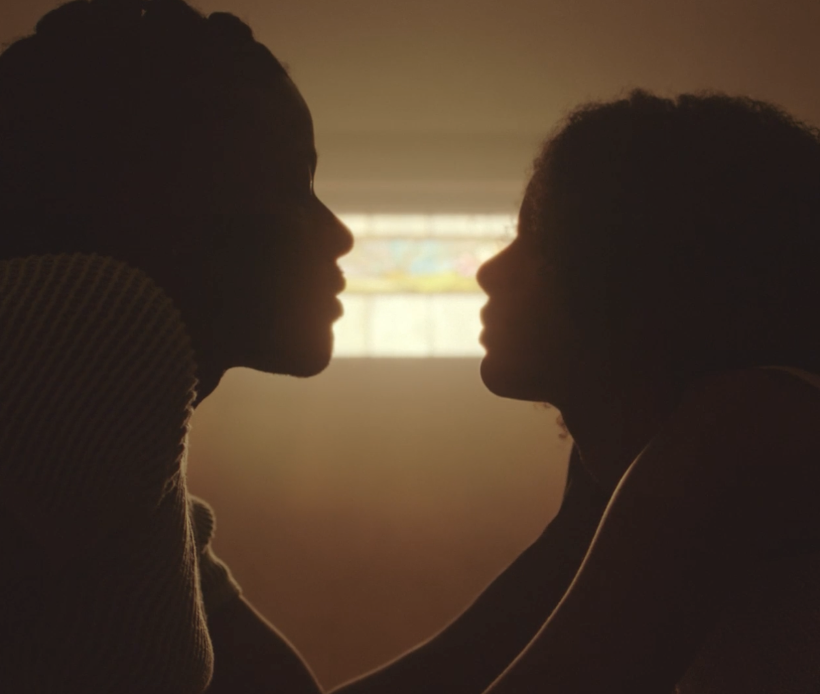
AM: I think the great thing about Surrealism is that there's always a truth somewhere at its center. Surrealism takes that truth and pushes it toward its most exaggerated, absurd conclusion. Or at least that's what I try to do. It begins with something real. A true kernel of an idea, a feeling, an observation. And once you've found that truth, you can begin to explore how far it can stretch.
There's that old myth about boiling a frog. If you put it into boiling water, it'll jump out. But if you slowly raise the temperature, it'll stay until it's too late. I think there's something about the Black experience that feels like that. The temperature is constantly rising, but we're expected to continue living as though nothing has changed. I wanted the film to capture that uneasiness, that almost imperceptible escalation.
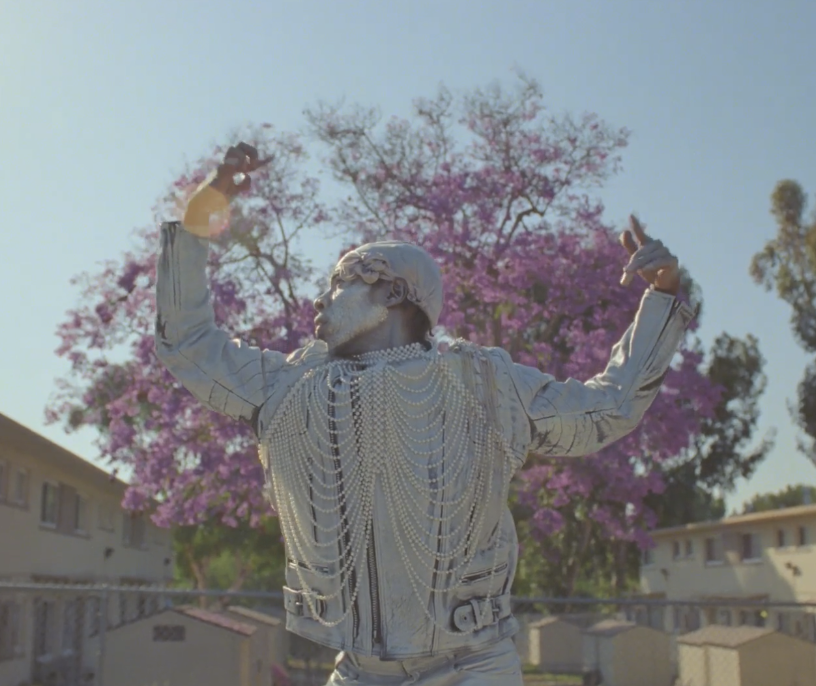
Visually, that meant creating a world that feels recognizable, but where something is always slightly off. There's an increasing police presence, a sense of occupation slowly creeping into the everyday. But I also wanted another presence, something supernatural. Something watching the watchers.
I've always been fascinated by aliens, mythology, spirituality, and religion. Sometimes I wonder whether they're all different languages we've developed to describe the same phenomena.
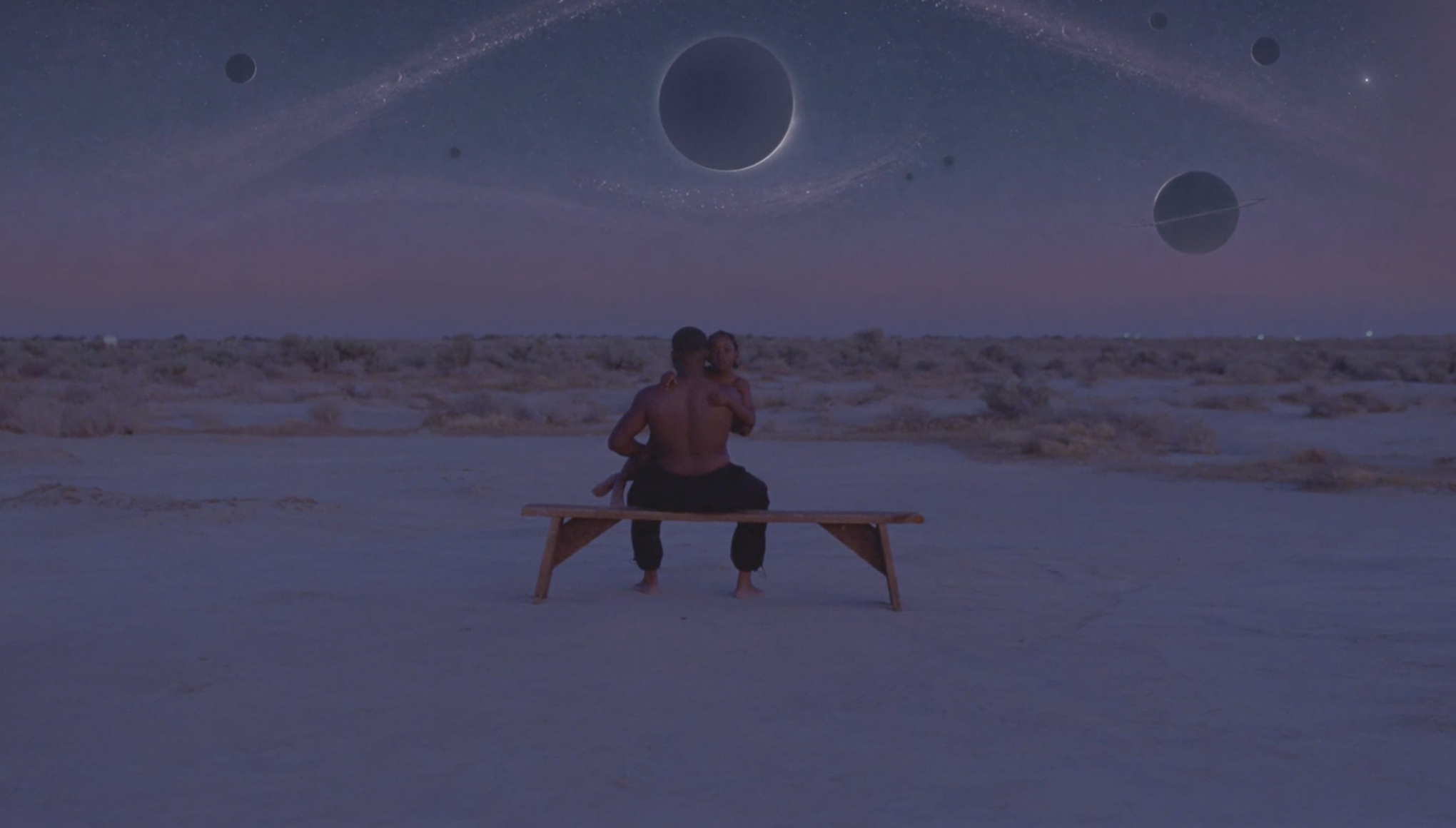
So I began drawing from those ideas to imagine what this higher "they" might look like. These beings are ever-present throughout the film, but they never intervene. They simply observe.
You have these two forms of surveillance existing simultaneously. One familiar and institutional, the other strange and seemingly divine. And suddenly the people who have always occupied the position of power are themselves being watched.
IF: Where does spirituality reside in the film?
AM: I think there's a question hovering over the entire film, which is: What would God say?
We have these supernatural beings who are ever-present, observing everything, but never intervening. There's something both spiritual and unsettling about that. The idea that something greater than us might be watching, that it might know what's happening, but that it chooses to remain silent.
But there's another spiritual presence in the film, one that isn't necessarily visible.
Throughout the film, there's this recurring motif of whispering voices. A kind of knowing. I've always thought that if Black people had a superpower, it would be that. A knowing. Not everything comes from intelligence, empirical evidence, or facts. You can feel when something isn't right. You can smell bullshit from a mile away.
And I think that knowing is connected to this perpetual state of anticipation. When you've spent generations living under oppression, you develop an instinct for recognizing its presence, even before it announces itself.
I wanted to personify that instinct through sound. These whispers become ancestral voices, something passed down through generations. A kind of collective consciousness.
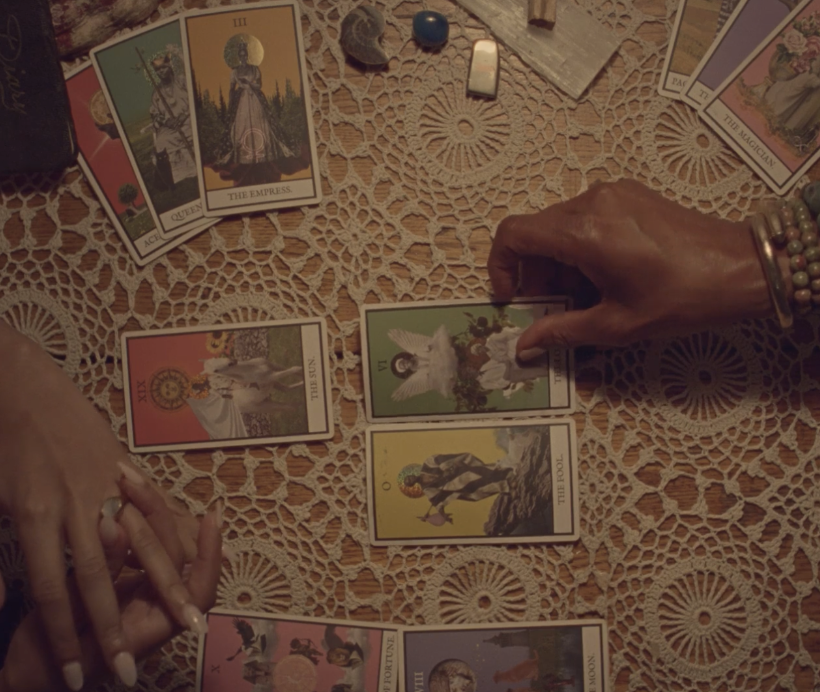
Each vignette in the film exists in the aftermath of some interruption. Someone has been taken, someone is missing, someone is hiding. A father is grabbed in the middle of the night. People are hiding from the police. A woman visits a fortune teller searching for answers about her missing husband. These are people trying to pick up the pieces of lives that have been interrupted.
And through all of it, those voices remain. Almost as if the ancestors are whispering, keep going.
For me, that's where the spirituality really resides — in this invisible inheritance of resilience.
Because ultimately, if the film asks what we'll do when they come for us, I think Black people already have an answer. It's the same answer we've given every other time they've come for us. We continue.
IF: How do you reconcile both beauty and fear in this work?
AM: I think this question inevitably brings me to the conversation around trauma, particularly Black trauma in cinema.
It's something I hear quite often, especially from other Black filmmakers, writers, and artists. This idea that people are tired of seeing Black trauma. Tired of slave narratives, gang narratives, stories about suffering.
And I understand the exhaustion. But I've always found that statement interesting because, to me, it implies a certain amount of choice. As though the absence of trauma in our storytelling somehow means the absence of trauma in our lives.
I don't shy away from it. I lean into it. I think so much of this conversation comes down to perspective. Someone looks at a story about slavery and sees a person being victimized. I look at that same story and see someone who survived something unimaginable — someone who found ways to retain their humanity in a system designed to strip it away.
I think it's interesting that we've come to associate the depiction of suffering with the absence of dignity, rather than revealing the extraordinary lengths to which people go to preserve their humanity. That's where beauty enters the film.
I'm interested in finding the beauty that persists in spite of oppression. The small gestures, the humor, the intimacy, the absurdity of everyday life. Some of the most profound expressions of humanity emerge in those moments.
So for me, beauty and fear coexist. I wanted the film to reflect that contradiction. The world can be terrifying and beautiful at the same time. Someone can be living through the worst moment of their life and still find a reason to laugh.
Perhaps that's the most radical thing about resilience. It isn't simply surviving what happens to you. It's refusing to allow what happens to you to become the entirety of who you are.
IF: Recent discourse is increasingly apocalyptic. What questions do you want audiences to raise with When They Come for Us?
AM: The film is supposed to feel like the end of the world. I started thinking about what the days before the end would look like. The strange thing is, you probably wouldn't know. It could be some ordinary Tuesday. People would be going to work, making breakfast, arguing with their partners, falling in love. Life would continue right up until the moment it didn’t. I wanted the film to exist in that space - slightly mundane, with this creeping sense that something terrible is approaching. And in doing so, I wanted to capture how deeply unsettling, how dehumanizing it is to live in a constant state of anticipation.
Because in a strange way, Black people, and oppressed people more broadly, are uniquely prepared for the apocalypse. When you've spent generations living with the possibility that your world could be taken away at any moment, the end of the world begins to feel like business as usual.
The film actually began with two ideas that have stayed with me. One is the warning often associated with the civil rights movement: "If they come for me in the morning, they will come for you in the night." The other is Martin Niemöller's First They Came.
That second idea was especially important to the visual world of the film. I wanted this sense of an occupation happening in the periphery. Black people being rounded up, people disappearing, an increasing police presence, while this larger, mysterious force watches everything unfol
And what's interesting is how much more culturally relevant the film has become since I first conceived it. I think about war abroad, or culture wars here in America, we are faced with recurring questions about state power, dehumanization, and the ease with which we learn to accept the suffering of others.
It brings me back to that warning: if they come for me in the morning, they'll come for you at night. I think we have a tendency to imagine oppression as something that happens to other people. We tell ourselves that we're safe, that we're different, that whatever is happening over there could never happen here. And perhaps that belief is what allows us to remain spectators for so long. But history has shown us how easily the boundaries of who deserves protection, dignity, or even humanity can shift.
So I suppose the question I want audiences to leave with isn't simply, What will you do when they come for us?
It's also, What are you doing while they're coming for someone else?
“The world can be terrifying and beautiful at the same time. Someone can be living through the worst moment of their life and still find a reason to laugh. Perhaps that's the most radical thing about resilience. It isn't simply surviving what happens to you. It's refusing to allow what happens to you to become the entirety of who you are.”
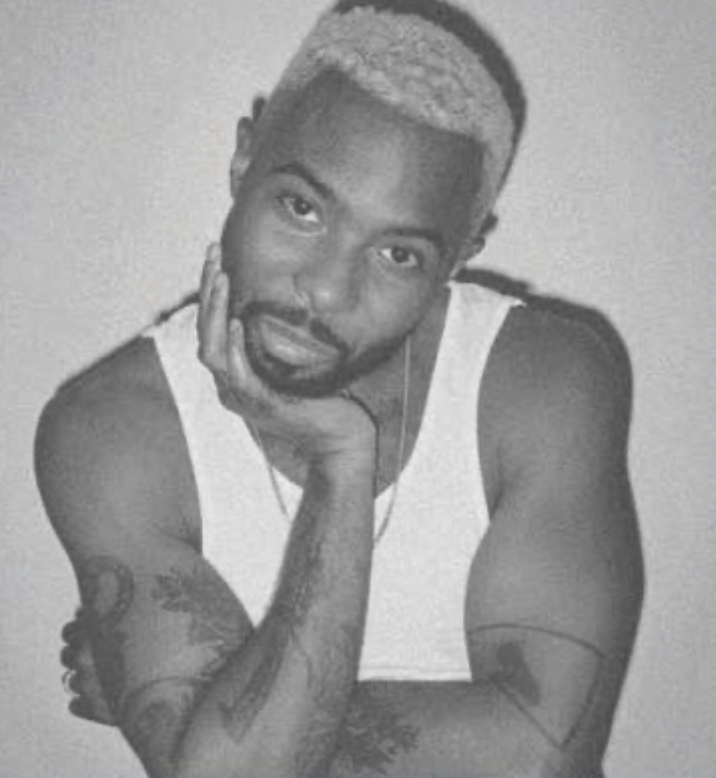
André Muir is a Chicago-born, Brooklyn-based writer and director whose work explores identity, spirituality, and the Black diasporic experience. The son of Jamaican immigrants, he brings a distinctive visual language and emotional depth to films spanning narrative, music, and documentary. His award-winning shorts include 4 Corners and Patois, alongside collaborations with artists including Ravyn Lenae, Mick Jenkins, and Vic Mensa. A Sundance Screenwriters Intensive fellow and recipient of the Institute’s inaugural Uprise Grant, Muir received the Michael Latt Legacy Fund’s inaugural Catalyst Award for his short film When They Come for Us.